

Growth Hormone Peptide Therapy
A medically supervised approach to supporting your body's own growth hormone — using peptide secretagogues rather than synthetic growth hormone — with comprehensive lab work and monitoring at Rewind Anti-Aging of Miami.
What Is Growth Hormone?
Growth hormone, also called somatotropin, is a 191-amino acid protein hormone produced by the anterior pituitary gland. It is one of the most important hormones in the body — governing growth during childhood and continuing to play critical roles in metabolism, body composition, tissue repair, and cellular regeneration throughout adulthood.
Growth hormone acts both directly and indirectly. It binds to growth hormone receptors on cells throughout the body, and it stimulates the liver to produce insulin-like growth factor 1 (IGF-1), which mediates many of its downstream effects.
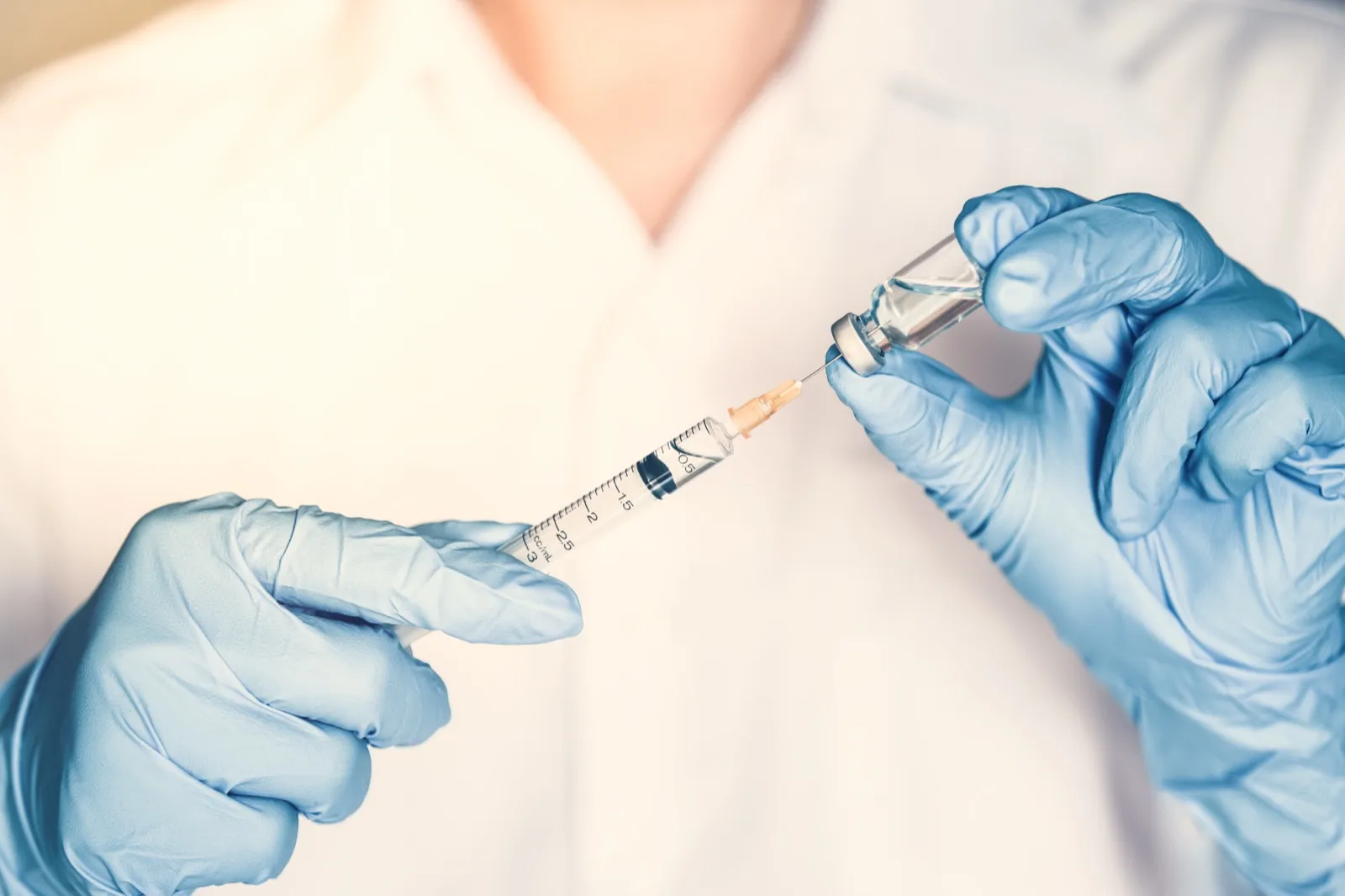
The Role of Growth Hormone in Your Body
Growth hormone and IGF-1 together regulate critical systems throughout your body.
Body Composition
Promotes lean muscle growth and stimulates the breakdown of stored fat (lipolysis).
Bone Density
Supports bone mineral content and skeletal integrity.
Tissue Repair
Accelerates repair of muscle, tendon, cartilage, and skin.
Sleep Quality
Growth hormone is released during deep sleep and supports healthy sleep architecture.
Skin Health
Supports collagen production, skin thickness, and elasticity.
Cognitive Function
Growth hormone receptors in the brain support memory, focus, and neuroprotection.
Age-Related Growth Hormone Decline
Growth hormone production peaks during puberty and declines steadily in adulthood. After age 30, growth hormone production declines by approximately 14% per decade. By age 60, most adults produce less than half the growth hormone they did in their 20s.
This decline manifests as many changes commonly attributed to "normal aging." The question driving modern anti-aging medicine: how much is truly inevitable, and how much is a treatable hormonal deficiency?
Signs of GH Decline
- Increased body fat, particularly visceral abdominal fat
- Loss of lean muscle mass (sarcopenia)
- Decreased bone density
- Thinner, less elastic skin with more wrinkles
- Reduced exercise capacity and slower recovery
- Poorer sleep quality with less deep sleep
- Decreased energy and stamina
- Cognitive changes — reduced focus, mental clarity, and memory
What Growth Hormone Does in the Body
Growth hormone influences muscle, fat metabolism, bone density, skin, sleep, and tissue repair throughout adult life.
Body Composition
Growth hormone helps regulate lean muscle mass and fat metabolism, including abdominal visceral fat.
Sleep
Growth hormone is secreted largely during deep, slow-wave sleep, and the two are closely linked.
Skin
Growth hormone supports collagen production, skin thickness, and elasticity.
Cognition
Growth hormone and IGF-1 act on the brain and are involved in focus, memory, and mental clarity.
Recovery
Growth hormone plays a role in tissue repair and recovery from exercise and injury.
Immune Function
Growth hormone influences immune cell activity and function.
How Rewind Optimizes Growth Hormone
At Rewind Anti-Aging of Miami, we take a measured, evidence-based approach centered on growth hormone secretagogue peptides — signaling molecules that prompt your own pituitary gland to release growth hormone, rather than injecting synthetic growth hormone.
Why a Peptide-First Approach
Peptides like sermorelin, CJC-1295, and ipamorelin stimulate your pituitary to produce its own growth hormone. The sermorelin and ipamorelin combination is a widely used growth-hormone-releasing protocol.
- Preserves your natural feedback loop
- Physiological, pulsatile GH release
- Generally milder side-effect profile
- Tailored to your labs and goals
The GH-Axis Peptides We Use
Rewind's clinical team selects from established growth-hormone-releasing peptides based on your evaluation.
- Sermorelin — GHRH analog, foundational protocol
- CJC-1295 — long-acting GHRH analog
- Ipamorelin — selective GH secretagogue
- Tesamorelin — GHRH analog studied for visceral fat
Monitoring & Safety
IGF-1 Levels
The primary marker for growth hormone status. Measured at baseline, at 4-6 weeks, and at regular intervals.
Fasting Glucose & HbA1c
Growth hormone can affect insulin sensitivity. We monitor metabolic markers to ensure blood sugar remains controlled.
Lipid Panel
Growth hormone affects cholesterol and triglyceride metabolism.
Symptoms & Side Effects
Joint pain, fluid retention, and other dose-dependent effects are tracked and the dose adjusted accordingly.
Body Composition
Tracking changes in fat mass and lean mass to confirm therapy is producing expected benefits.
Side Effects of GH Peptides
When properly dosed and monitored, growth hormone peptide therapy is generally well-tolerated. Most side effects are mild and manageable.
Mild redness, irritation, or tenderness at the injection site. Usually brief and self-limiting.
Mild fluid retention, especially in early weeks of treatment. Typically temporary and dose-related.
Reported by some patients, usually mild and transient.
Raising growth hormone and IGF-1 can influence insulin sensitivity, so metabolic markers are monitored during therapy.
Important: Because growth hormone and IGF-1 can promote cell proliferation, growth hormone peptide therapy is not appropriate for patients with active cancer.
The Rewind Process
From evaluation through ongoing care — a measured, evidence-based approach to growth hormone therapy.
Comprehensive Evaluation
Symptoms assessment, health history review, and goals discussion with Rewind's clinical team.
Baseline Lab Work
IGF-1, metabolic panel, and related markers establish your baseline and confirm whether a GH-axis protocol is appropriate.
Peptide Protocol Selection
A growth-hormone-releasing peptide protocol — sermorelin, CJC-1295, ipamorelin, or tesamorelin — matched to your physiology and goals.
Regular Monitoring
IGF-1 levels, metabolic markers, body composition, and tolerability tracked at scheduled intervals.
Adjust & Maintain
Protocol adjustments based on labs and symptoms, with cycling or maintenance planning over time.
Related Treatments
Sermorelin Therapy
A growth hormone-releasing peptide that stimulates your pituitary gland to naturally increase growth hormone production.
Learn more →Tesamorelin Therapy
FDA-approved GHRH analog that targets visceral fat reduction while boosting growth hormone levels.
Learn more →Peptide Therapy
Explore our full suite of therapeutic peptides for anti-aging, recovery, and performance optimization.
Learn more →Explore Growth Hormone Therapy
Sermorelin and Ipamorelin: Benefits of Combination Therapy
How growth hormone-releasing peptides compare to direct growth hormone.
Sermorelin Before and After: Real Results
What patients experience with growth hormone therapy over time.
What Is Peptide Therapy?
An overview of peptide-based approaches to growth hormone support.
Frequently Asked Questions
How do growth hormone peptides work?
Growth hormone peptides — such as sermorelin, CJC-1295, and ipamorelin — are signaling molecules, not hormones. Rather than introducing growth hormone from outside the body, they stimulate your pituitary gland to produce and release your body's own growth hormone naturally, in its normal pulsatile rhythm. This preserves your natural feedback loop, produces a more physiological pattern of release, and carries a lower risk of side effects than introducing growth hormone directly. For this reason, Rewind's growth hormone program is built around peptide secretagogues.
What are the signs of age-related growth hormone decline?
Growth hormone output falls steadily with age, and the changes often overlap with what people think of as normal aging — persistent fatigue, poor or shallow sleep, increased body fat (especially around the abdomen), loss of lean muscle, thinning skin, and slower recovery from exercise or injury. These symptoms have many possible causes, so Rewind starts with a comprehensive evaluation and IGF-1 lab testing before considering whether a growth-hormone-releasing peptide protocol is appropriate for you.
Are growth hormone peptides prescribed and supervised by a physician?
Yes. At Rewind Anti-Aging of Miami, growth hormone peptides are prescribed by a licensed clinician based on your symptoms, evaluation, and lab work, and are prepared by licensed compounding pharmacies. These peptides are not FDA-approved drugs and are used under ongoing medical supervision with regular monitoring. Your clinician will review the current regulatory status, expected benefits, and risks with you before treatment.
What are the side effects of growth hormone peptides?
Side effects are generally mild. The most commonly reported include injection-site redness or irritation, mild headache, flushing, and occasional water retention, especially early in treatment. These effects are typically transient and resolve on their own. Because growth-hormone-releasing peptides work through your own pituitary and preserve natural feedback control, they tend to carry a lower risk profile than injected growth hormone. Serious effects are rare when peptides are prescribed at appropriate doses and monitored by a clinician.
How long does it take to see results from growth hormone peptide therapy?
Results occur in phases. Improved sleep quality is often the first benefit, noticed within the first one to two weeks. Increased energy, improved recovery from exercise, and better mood typically appear within the first one to two months. Body composition changes — reduced abdominal fat, increased lean muscle tone, improved skin quality — generally become visible between months three and six of consistent therapy, with continued development over time.
How long will I be on growth hormone peptide therapy?
Growth hormone peptides are typically prescribed in cycles of three to six months. Some patients cycle on and off with breaks in between, while others continue as part of a longer-term optimization strategy. Rewind's clinical team reassesses your IGF-1 levels, symptoms, and goals at regular intervals to determine the optimal protocol duration for you.
Schedule a Consultation
Find out whether growth hormone peptide therapy fits your physiology. Schedule a consultation with Rewind's clinical team to review your labs and goals.
References
- Khorram O, Laughlin GA, Yen SS. Endocrine and metabolic effects of long-term administration of [Nle27]growth hormone-releasing hormone-(1-29)-NH2 in age-advanced men and women. J Clin Endocrinol Metab. 1997;82(5):1472-1479. PMID: 9141536
- Teichman SL, Neale A, Lawrence B, et al. Prolonged stimulation of growth hormone (GH) and insulin-like growth factor I secretion by CJC-1295, a long-acting analog of GH-releasing hormone, in healthy adults. J Clin Endocrinol Metab. 2006;91(3):799-805. PMID: 16352683
- Falutz J, Allas S, Blot K, et al. Metabolic effects of a growth hormone-releasing factor in patients with HIV. N Engl J Med. 2007;357(23):2359-2370. PMID: 18057338
- Sigalos JT, Pastuszak AW. The Safety and Efficacy of Growth Hormone Secretagogues. Sex Med Rev. 2018;6(1):45-53. PMID: 28400207
⚕ Medical Disclaimer
The information on this page is for educational purposes only and does not constitute medical advice, diagnosis, or treatment. All treatments at Rewind Anti-Aging of Miami are performed under the supervision of licensed medical professionals. Individual results may vary. Consult your physician before beginning any new treatment protocol.
Meet our clinical team →Areas We Serve in Miami & South Florida
Our clinic at 24 NW 29th Street is in Wynwood & Midtown, minutes from Edgewater and Brickell. We also care for patients across Coral Gables, Aventura, Key Biscayne, and Doral — plus the entire state of Florida via telehealth.