
Galleri Cancer Screening Test
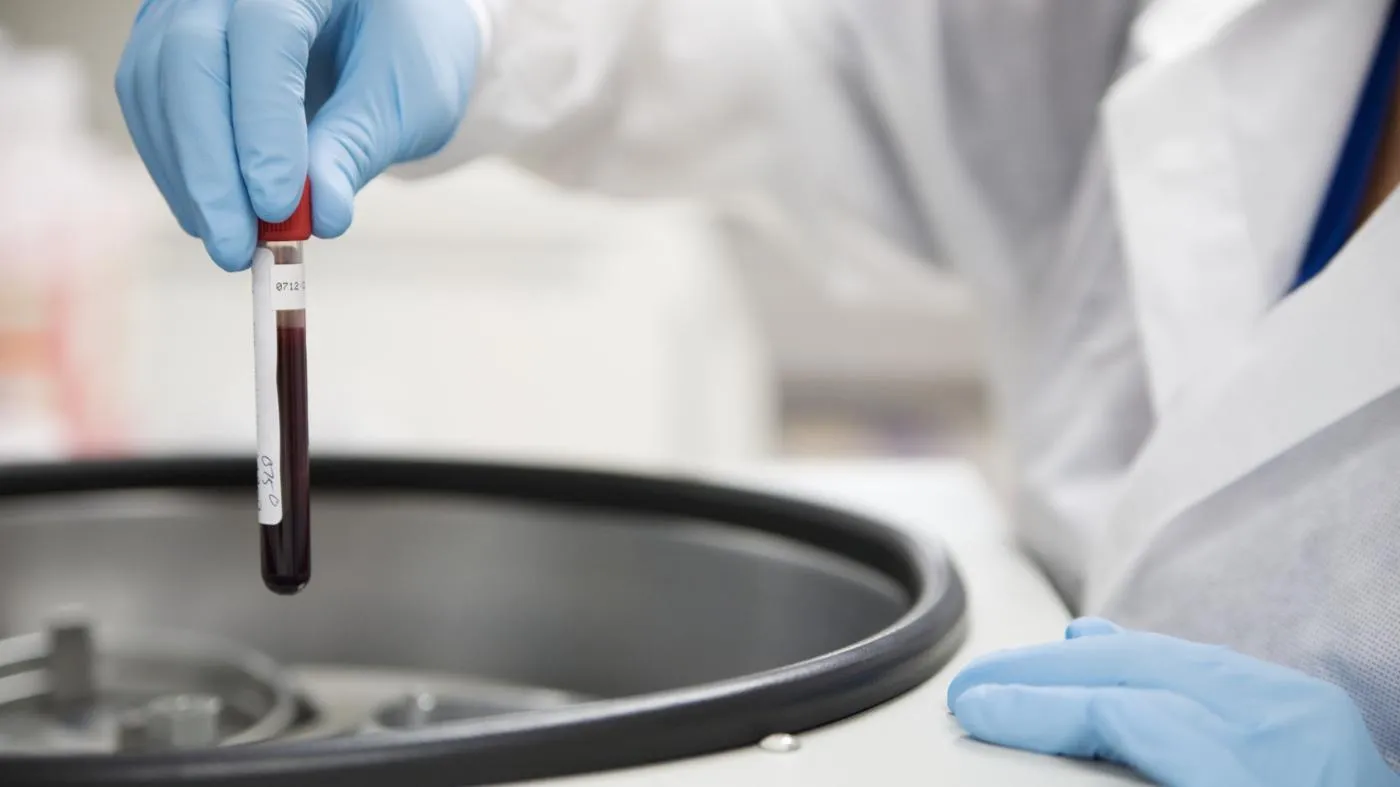
One blood draw. Over 50 cancer types screened. The Galleri test detects cancers that standard screenings miss — including pancreatic, ovarian, liver, and stomach cancers that often go undetected until it's too late.
The Problem with Current Cancer Screening
Today's standard cancer screenings — mammograms, colonoscopies, Pap smears, PSA tests, low-dose CT scans — are life-saving tools. But they only screen for five cancer types. The remaining 70%+ of cancer deaths come from cancers that have no recommended screening test at all.
Pancreatic cancer. Ovarian cancer. Liver cancer. Stomach cancer. These are often detected only after symptoms appear — by which point, the disease is frequently advanced and treatment options are limited. The five-year survival rate for pancreatic cancer detected at stage IV is approximately 3%. Detected at stage I, it rises to 44%.
Early detection changes everything. The Galleri test was developed to fill this critical gap — part of a proactive approach that also includes monitoring key biomarkers like SHBG for comprehensive health assessment.

mortality rate for cancers found at late stage
mortality rate for cancers found at early stage
of cancer deaths come from cancers with no recommended screening test
five-year survival for pancreatic cancer caught at stage I vs. IV
How the Galleri Test Works
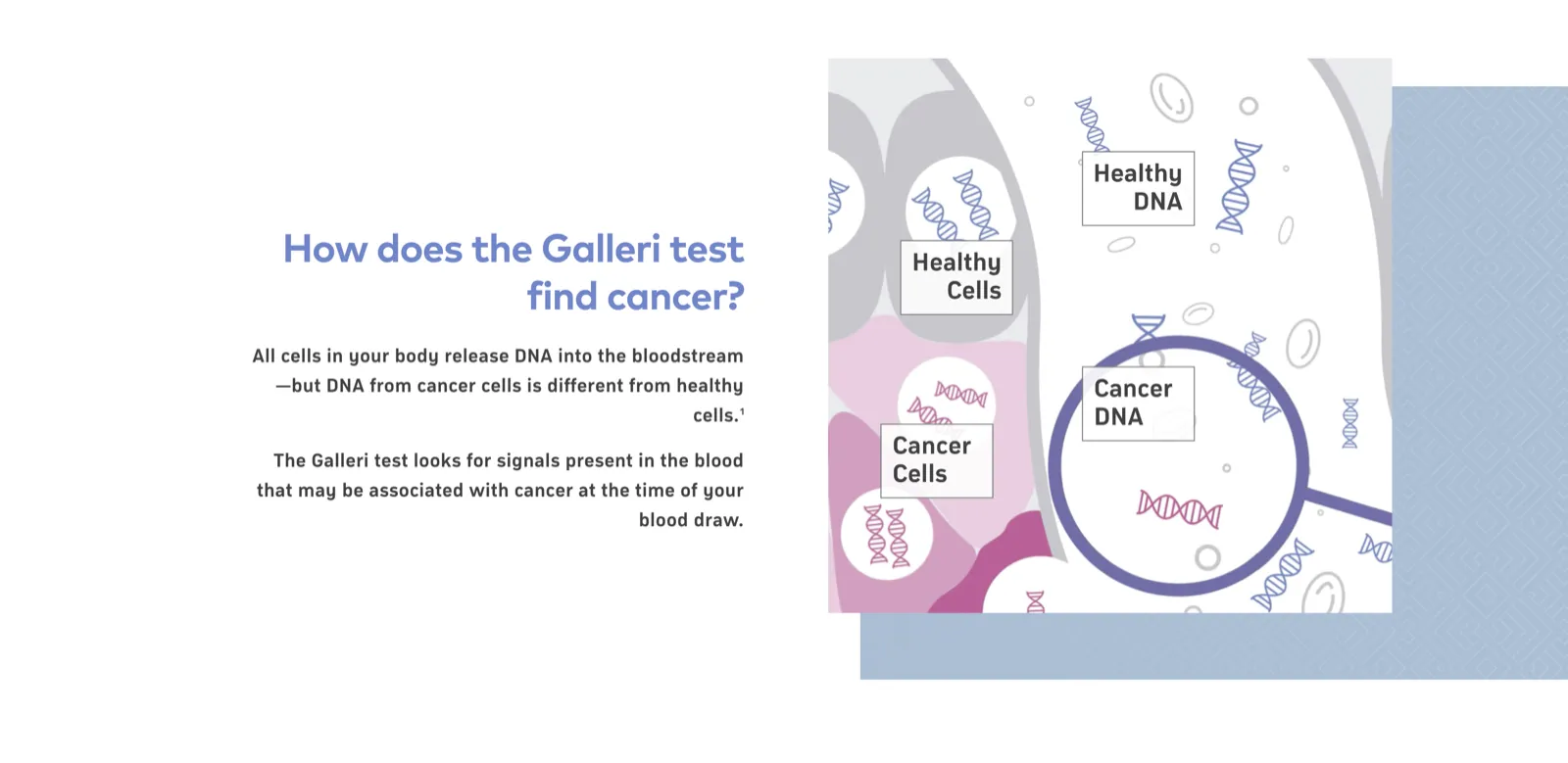
Every cell in your body — healthy and cancerous — sheds tiny fragments of DNA into your bloodstream. These fragments are called cell-free DNA (cfDNA). The Galleri test doesn't look at DNA mutations. Instead, it analyzes methylation patterns — chemical tags on the DNA that control gene expression.
Cancer cells have distinctive methylation patterns that differ from healthy cells. By analyzing these patterns across thousands of genomic regions, the Galleri test can:
- Detect a cancer signal — determine whether cancer-associated cfDNA is present in your blood
- Predict the Cancer Signal Origin (CSO) — identify where in the body the cancer is likely located, guiding follow-up diagnostics
Cancer Types Detected
Specificity
Simple Blood Draw
No Other Screening Exists
Key Benefits of the Galleri Test
Detects 50+ cancer types
From a single blood draw — including many cancers with no recommended screening today, such as pancreatic, ovarian, liver, stomach, esophageal, and head-and-neck cancers.
One simple blood draw
No prep. No fasting. No radiation. A standard venous draw at our Wynwood clinic takes about ten minutes, and the sample ships to GRAIL's CLIA-certified laboratory.
Actionable results with CSO
When a signal is detected, the test predicts the Cancer Signal Origin — pinpointing where in the body the cancer likely sits, so your physician can focus follow-up diagnostics precisely.
Validated in the largest multi-cancer early detection study to date
The PATHFINDER 2 study — presented at the ESMO Annual Meeting in October 2025 — enrolled 35,878 adults aged 50 and older across the United States and Canada with no clinical suspicion of cancer. It is the largest prospective study of a multi-cancer early detection (MCED) test ever conducted.
more cancers detected when Galleri is added to USPSTF A & B recommended screenings
specificity — fewer than 1 in 200 tests yield a false positive
of Galleri-detected cancers were caught at stage I or II — when treatment outcomes are best
of cancers detected by Galleri have no standard-of-care screening available
PATHFINDER 2 pre-specified analysis of the first 25,578 participants with ≥12 months of follow-up; presented by Nabavizadeh et al. at ESMO Congress 2025. Earlier validation: Schrag D, et al. Multi-cancer early detection in the PATHFINDER study. Lancet 2023;402(10409):1251–1260.
Cancers Detected by Galleri
The Galleri test can detect signals from more than 50 cancer types — including many that have no other screening available.
No Other Screening Exists
- Pancreatic cancer
- Ovarian cancer
- Liver & bile duct cancer
- Stomach & esophageal cancer
- Kidney cancer
- Bladder cancer
- Head & neck cancers
- Lymphoma & leukemia
- Multiple myeloma
- Sarcoma
- And many more
Additional Layer for Screenable Cancers
- Breast cancer
- Colorectal cancer
- Lung cancer
- Prostate cancer
- Cervical cancer
Galleri complements — does not replace — standard screenings for these cancers.
Complete List of Cancer Types Detected
The Galleri test detects signals from these 50+ cancer types, identified by tissue or site of origin.
A
- Adrenal Cortical Carcinoma
- Ampulla of Vater
- Anus
- Appendix, Carcinoma
B
- Bile Ducts, Distal
- Bile Ducts, Intrahepatic
- Bile Ducts, Perihilar
- Bladder, Urinary
- Bone
- Breast
C
- Cervix
- Colon and Rectum
E
- Esophagus and Esophagogastric Junction
G
- Gallbladder
- Gastrointestinal Stromal Tumor
- Gestational Trophoblastic Neoplasms
K
- Kidney
L
- Larynx
- Leukemia
- Liver
- Lung
- Lymphoma (Hodgkin and Non-Hodgkin)
M
- Melanoma of the Skin
- Merkel Cell Carcinoma
- Mesothelioma, Malignant Pleural
N
- Nasal Cavity and Paranasal Sinuses
- Nasopharynx
- Neuroendocrine Tumors of the Appendix
- Neuroendocrine Tumors of the Colon and Rectum
- Neuroendocrine Tumors of the Pancreas
O
- Oral Cavity
- Oropharynx (HPV-Mediated, p16+)
- Oropharynx (p16-) and Hypopharynx
- Ovary, Fallopian Tube and Primary Peritoneum
P
- Pancreas, exocrine
- Penis
- Plasma Cell Myeloma and Plasma Cell Disorders
- Prostate
S
- Small Intestine
- Soft Tissue Sarcoma of the Abdomen and Thoracic Visceral Organs
- Soft Tissue Sarcoma of the Head and Neck
- Soft Tissue Sarcoma of the Retroperitoneum
- Soft Tissue Sarcoma of the Trunk and Extremities
- Soft Tissue Sarcoma Unusual Histologies and Sites
- Stomach
T
- Testis
U
- Uterus, Carcinoma and Carcinosarcoma
- Ureter, Renal Pelvis
- Uterus, Sarcoma
V
- Vagina
- Vulva
Klein EA, et al. Clinical validation of a targeted methylation-based multi-cancer early detection test using an independent validation set. Ann Oncol. 2021;32(9):1167–1177. Cancer cases enrolled in the CCGA Study were assigned a cancer type as defined in the American Joint Committee on Cancer (AJCC) manual (8th edition).
Understanding Your Results
Your Galleri results will fall into one of two categories. Either way, your care team at Rewind will walk you through exactly what it means and what comes next.
No Cancer Signal Detected
The test did not find a cancer signal. Continue your standard recommended screenings and consider annual re-testing with Galleri for ongoing monitoring. A negative result does not guarantee the absence of cancer — no test is 100% sensitive.
Cancer Signal Detected
The test found a cancer signal and provides a Cancer Signal Origin (CSO) prediction — identifying where in the body the signal likely originated. Your physician will order targeted follow-up diagnostics (imaging, biopsy, etc.) based on the predicted origin. The false positive rate is less than 1%, so a positive result warrants prompt follow-up.

Who Should Get the Galleri Test?
Galleri is designed for adults who want to go beyond standard screenings. The following groups benefit most from multi-cancer early detection.
Adults Aged 50+
Cancer risk increases significantly with age. Annual screening becomes critically important after 50.
Family History of Cancer
Especially if multiple family members have been diagnosed, or if cancers occurred at younger ages.
Prior Cancer Patients
For surveillance and early detection of recurrence or new primary cancers after previous treatment.
Elevated Risk Factors
Smoking history, occupational exposures, genetic predispositions (BRCA, Lynch syndrome, etc.).
Health-Conscious Individuals
Those who want the most comprehensive cancer screening available today — proactive, not reactive.
What to Expect
From consultation to results — the entire process is simple, fast, and guided by your care team.
Consultation
Brief discussion of your cancer risk factors, medical history, and any family history of cancer.
Blood Draw
A standard venous blood draw at our Wynwood clinic. Quick, simple — takes about 10 minutes.
Lab Processing
Your sample is sent to GRAIL's CLIA-certified laboratory for cfDNA methylation analysis. Results typically take 2-3 weeks.
Results Review
We schedule a dedicated appointment to review your results, discuss any findings, and determine next steps if a signal is detected.
Important Considerations
- The Galleri test is a screening tool, not a diagnostic test. A positive result requires follow-up diagnostics to confirm and localize the cancer.
- A negative result does not guarantee the absence of cancer. No screening test is 100% sensitive.
- Galleri should complement, not replace, recommended cancer screenings (mammography, colonoscopy, Pap smears, low-dose CT).
- The test is not FDA-approved but is available as a laboratory-developed test (LDT) performed in a CLIA-certified lab.
- Annual testing is recommended by GRAIL for eligible individuals to maximize early detection rates.
Related Treatments
Executive Lab Panel
Comprehensive bloodwork panel covering 30+ biomarkers for a complete picture of your metabolic and hormonal health.
Learn more →TrueAge Epigenetic Test
Measure your true biological age through DNA methylation analysis to track and validate anti-aging treatments.
Learn more →Boston Heart Diagnostics
Advanced cardiovascular testing beyond standard cholesterol with LDL particle analysis and genetic risk factors.
Learn more →Diagnostic Testing
Comprehensive diagnostic testing services that establish your baseline health and guide personalized treatment.
Learn more →Full-Body MRI
Radiation-free whole-body MRI screening to detect tumors, aneurysms, and other conditions early.
Learn more →Proactive Health Insights
SHBG: What It Means for Your Hormones
Understanding key biomarkers for comprehensive health assessment.
Vitamin D and Testosterone
Why proactive testing matters for long-term health optimization.
What Is the Galleri Cancer Test? How Multi-Cancer Screening Works
An in-depth look at how the Galleri test detects 50+ cancer types from a single blood draw.
Frequently Asked Questions
What is the Galleri test?
The Galleri test is a multi-cancer early detection blood test developed by GRAIL. It can detect a shared cancer signal across more than 50 types of cancer — many of which have no other recommended screening — using a single blood draw.
How does the Galleri test work?
Cancer cells shed fragments of their DNA into the bloodstream (cell-free DNA or cfDNA). The Galleri test analyzes methylation patterns on this cfDNA — specific chemical modifications that differ between cancer and non-cancer cells. When a cancer signal is detected, the test also predicts the tissue of origin, helping direct follow-up diagnostic workup.
Who should get the Galleri test?
Galleri is recommended for adults aged 50 and older, or those with elevated cancer risk factors including family history of cancer, prior personal cancer history, environmental or occupational exposures, or genetic predispositions. It is designed to complement — not replace — standard cancer screenings.
What cancers can Galleri detect?
Galleri can detect over 50 cancer types including pancreatic, liver, ovarian, stomach, esophageal, kidney, bladder, head and neck, and many others that have no standard screening test. It also detects cancers that do have standard screenings (breast, colorectal, lung, prostate) as an additional layer of detection.
What does a positive result mean?
A positive result means the test detected a cancer signal in your blood. The test also provides a Cancer Signal Origin (CSO) prediction — identifying where in the body the signal likely originated. Your physician will then order targeted follow-up diagnostics (imaging, biopsy, etc.) based on the predicted origin.
What is the false positive rate?
The Galleri test has a specificity of 99.6% — fewer than 1 in 200 people who take the test receive a false positive (PATHFINDER 2 study, ESMO 2025). A positive result therefore has a very high likelihood of reflecting a real cancer signal. No test is perfect, however — false negatives can occur, which is why Galleri should complement, not replace, standard screenings.
Is the Galleri test covered by insurance?
The Galleri test is not currently covered by most insurance plans, so the cost is paid out-of-pocket. The test is HSA/FSA eligible on most plans, which can offset the cost significantly. We can discuss current pricing during your consultation. Many patients consider it a worthwhile investment given that early-stage cancer detection dramatically improves survival rates.
How often should I get the Galleri test?
GRAIL recommends annual testing for eligible individuals. Annual testing maximizes the chance of detecting cancer at an early, more treatable stage.
Early Detection Saves Lives
Don't wait for symptoms. Schedule your Galleri multi-cancer screening today and take control of your health with the most comprehensive cancer detection available.
⚕ Medical Disclaimer
The information on this page is for educational purposes only and does not constitute medical advice, diagnosis, or treatment. All treatments at Rewind Anti-Aging of Miami are performed under the supervision of licensed medical professionals. Individual results may vary. Consult your physician before beginning any new treatment protocol.
Meet our clinical team →Areas We Serve in Miami & South Florida
Our clinic at 24 NW 29th Street is in Wynwood & Midtown, minutes from Edgewater and Brickell. We also care for patients across Coral Gables, Aventura, Key Biscayne, and Doral — plus the entire state of Florida via telehealth.