
Ready to explore wellness optimization?
Schedule a free consultation with our medical team in Miami.
Most adults believe they are reasonably well-protected when it comes to cancer screening. They schedule their mammograms, get a colonoscopy at the recommended age, and assume that if something were growing, a test would catch it. That assumption is understandable. It is also dangerously incomplete.
The reality is that standard cancer screenings — the ones your primary care physician orders, the ones covered by insurance, the ones you have heard of — cover only about five cancer types. Five out of more than 100. The cancers with established routine screening are breast, cervical, colorectal, lung (for high-risk individuals), and prostate. Everything else — pancreatic cancer, ovarian cancer, liver cancer, stomach cancer, kidney cancer, lymphoma, and dozens more — has no routine screening protocol at all.
The Galleri multi-cancer early detection test was developed to address that gap. It is a single blood draw that screens for signals from over 50 cancer types simultaneously. This article explains how it works, what it can and cannot do, and who should consider it — with full transparency about its current limitations.
The Cancer Screening Gap Most People Don’t Know About
Consider the numbers. According to the American Cancer Society, more than 70% of cancer deaths come from cancer types for which there is no recommended screening test. Pancreatic cancer — one of the deadliest — is typically caught at stage 3 or 4 because there is nothing in standard care that looks for it in asymptomatic individuals. Ovarian cancer is similar: by the time symptoms appear, the disease is usually advanced. Stomach, liver, kidney, bladder, head and neck cancers — the same pattern repeats.
This is not a failure of individual diligence. It is a structural gap in how cancer screening works. The tests we have are excellent at what they do. Mammograms detect breast cancer. Colonoscopies find and remove precancerous polyps. Low-dose CT scans catch lung nodules in heavy smokers. But if a cancer develops in an organ that none of these tests examines, it grows in the dark.
For proactive individuals — the kind who track their bloodwork, invest in preventive health, and understand that aging is a biological process worth managing — this gap represents one of the most significant blind spots in modern medicine. You can optimize your hormones, monitor your metabolic health, and track your biological age with precision, yet still have no early-warning system for the majority of cancer types.
That is the problem the Galleri test was built to solve.
What the Galleri Test Is
The Galleri test is a multi-cancer early detection (MCED) blood test developed by GRAIL, a healthcare company focused on cancer detection. It screens for signals associated with more than 50 types of cancer using a single standard blood draw.
The test works differently from tumor marker tests you may be familiar with (like PSA for prostate cancer). Rather than measuring a single protein associated with one cancer, the Galleri test analyzes patterns in cell-free DNA circulating in your blood — patterns that differ between individuals with and without active cancer.
When a cancer signal is detected, the test also provides a Cancer Signal Origin (CSO), which predicts where in the body the signal is coming from. This gives your provider a starting point for follow-up diagnostic testing rather than sending you through a battery of unfocused scans.
The test requires a standard blood draw — no fasting, no special preparation. Results are typically returned in two to three weeks. It is available through clinics that have incorporated it into their diagnostic testing offerings.
How It Works: Cell-Free DNA and Methylation
To understand the Galleri test, you need to understand two concepts: cell-free DNA and methylation.
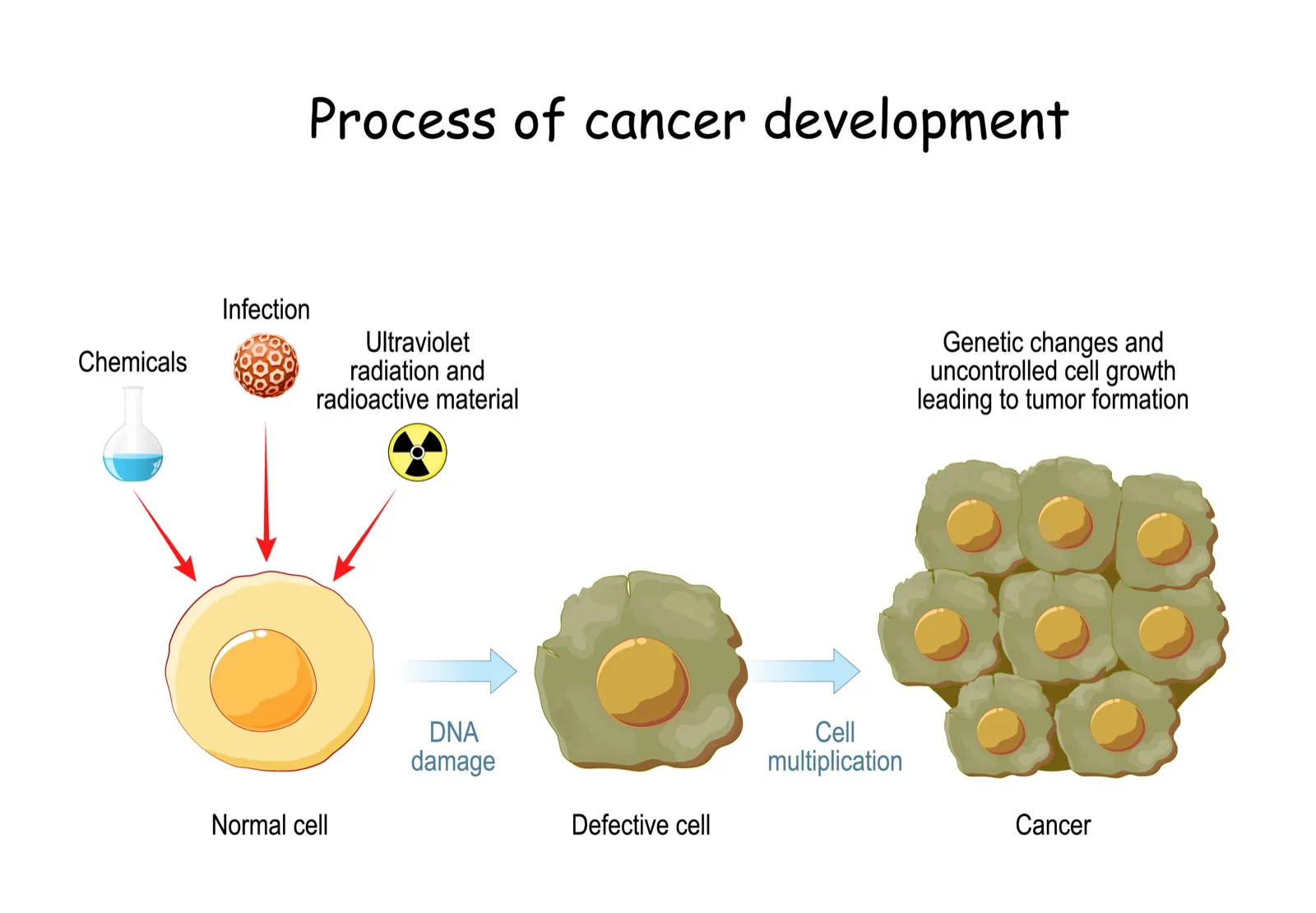
Cell-free DNA (cfDNA) is DNA that has been released into the bloodstream by dying cells. Every cell in your body eventually dies and is replaced, and when it does, fragments of its DNA enter your blood. This is normal. But when cancer cells are present, they also shed DNA into the bloodstream — and that cancer-derived cfDNA carries distinct characteristics.
Methylation is a chemical modification to DNA — specifically, the addition of a methyl group (a simple carbon-hydrogen molecule) to certain positions on the DNA strand. Methylation patterns act as a kind of chemical instruction manual, telling cells which genes to turn on and which to silence. Normal cells have one set of methylation patterns. Cancer cells have dramatically different ones.
Think of it this way: if DNA is the text of a book, methylation is the highlighting and underlining. A normal cell and a cancer cell may have the same text, but the cancer cell has highlighted entirely different passages. The Galleri test reads those highlights.
Using next-generation sequencing and machine learning, the test analyzes methylation patterns across hundreds of thousands of sites on the cfDNA in your blood. It compares those patterns to a database built from thousands of confirmed cancer and non-cancer samples. When the pattern matches cancer, it flags a signal and predicts the tissue of origin.
This is fundamentally different from genetic tests like 23andMe or BRCA screening. Those tests look at inherited genetic variants — mutations you were born with that may increase your lifetime risk of developing certain cancers. The Galleri test is not looking at your inherited risk. It is looking for active cancer signals happening now, in real time, based on what is actually circulating in your blood today.
What Cancers Does It Screen For?
The Galleri test screens for signals from more than 50 cancer types. This includes many cancers that have existing screening methods and — critically — many that do not.
Here is why that matters. The table below separates cancers into two categories:
| Cancers WITH Standard Screening | Cancers WITHOUT Standard Screening |
|---|---|
| Breast (mammogram) | Pancreatic |
| Cervical (Pap smear/HPV) | Ovarian |
| Colorectal (colonoscopy) | Liver and bile duct |
| Lung (low-dose CT, high-risk only) | Stomach and esophageal |
| Prostate (PSA, debated) | Kidney |
| Bladder | |
| Head and neck | |
| Lymphoma and multiple myeloma | |
| Sarcoma | |
| Small intestine | |
| Thyroid | |
| Uterine | |
| And many others |
The left column represents approximately 5 cancer types. The right column represents 45 or more. For every cancer type in that right column, the Galleri test may be the only screening tool available to you as an asymptomatic individual.
It is essential to emphasize: the Galleri test does not replace existing screenings. If you are due for a mammogram, get your mammogram. If you are due for a colonoscopy, schedule it. The Galleri test adds a layer of coverage for the cancers those tests do not address, and provides an additional data point for the ones they do.
Understanding Your Results
Galleri test results fall into one of two categories.
“No Cancer Signal Detected.” This is the result most people receive. It means the test did not identify methylation patterns consistent with cancer in your cfDNA. This is reassuring — but it does not guarantee the absence of cancer. No screening test is 100% sensitive. Small or early-stage cancers may not shed enough cfDNA to be detected, and some cancer types are detected more reliably than others.
“Cancer Signal Detected” with a Cancer Signal Origin (CSO). This result means the test identified methylation patterns consistent with cancer, and it predicts the organ or tissue where the signal is most likely originating. The CSO prediction has been shown to be accurate in approximately 88% of cases where cancer is confirmed.
The false positive rate is notably low. Specificity exceeds 99.5%, meaning fewer than 0.5% of people without cancer will receive a false positive result. In practical terms: if 200 people without cancer take the test, approximately one might receive an incorrect cancer signal. That is a significantly lower false positive rate than many standard screening tests.
If your test returns a cancer signal, the next step is a follow-up diagnostic workup. This typically involves targeted imaging (CT, MRI, or PET scan) based on the CSO, and potentially a biopsy. Your provider at Rewind will coordinate this process and, if a diagnosis is confirmed, facilitate referral to the appropriate oncology specialist.
A cancer signal on the Galleri test is not a diagnosis. It is a flag that requires confirmation through standard diagnostic procedures.
Who Should Consider the Galleri Test
The Galleri test is validated for use in adults aged 50 and older, which is the population with the highest incidence of the cancer types it detects. However, clinical context matters more than a strict age cutoff. Individuals who may benefit most include:
Adults aged 50 and older. Cancer incidence rises significantly with age. For individuals who are already proactive about their health — those who get annual bloodwork, monitor their hormones, and take longevity seriously — the Galleri test fills the largest remaining gap in their screening protocol.
Individuals with a family history of cancer. If a first-degree relative was diagnosed with a cancer type that has no standard screening — particularly pancreatic, ovarian, liver, or stomach cancer — multi-cancer screening offers a layer of surveillance that did not previously exist.
Prior cancer survivors. Individuals with a personal history of cancer face elevated risk of recurrence and secondary cancers. The Galleri test can serve as an additional monitoring tool alongside oncologist-directed surveillance.
Those with elevated risk factors. This includes current or former smokers, individuals with significant occupational exposures (asbestos, industrial chemicals), carriers of BRCA mutations or Lynch syndrome, and those with chronic conditions (such as hepatitis B or C) that elevate cancer risk.
Health-conscious individuals seeking comprehensive screening. Patients who already invest in executive-level lab work and proactive diagnostics often view the Galleri test as a logical extension of the same philosophy: test broadly, catch problems early, act before symptoms appear.
What the Test Can and Cannot Do
Transparency matters here. The Galleri test is a powerful tool, but it has clearly defined boundaries.
What it can do:
- Screen for signals from 50+ cancer types with a single blood draw
- Predict the tissue of origin when a signal is detected
- Catch cancers that have no other screening option
- Deliver results with an extremely low false positive rate (99.5%+ specificity)
- Complement existing screening methods for broader coverage
- Be repeated annually for ongoing surveillance
What it cannot do:
- Diagnose cancer (it is a screening tool — positive results require follow-up)
- Detect all cancers at all stages (sensitivity is lower for early-stage disease)
- Replace standard screenings like mammograms, colonoscopies, or Pap smears
- Guarantee that no cancer is present when the result is negative
- Detect all cancer types with equal reliability (some are detected more consistently than others)
Regulatory status: The Galleri test is not FDA-approved. It is available as a laboratory-developed test (LDT) processed in CLIA-certified laboratories. The FDA has granted it breakthrough device designation, and large-scale clinical trials are ongoing. This is a common pathway for advanced diagnostic tests — available and in clinical use while the regulatory review process continues.
Cost: The test is approximately $949 as a cash-pay service and is not currently covered by most insurance plans. Some employers and forward-thinking health plans are beginning to explore coverage, but for now it remains an out-of-pocket investment.
Galleri vs Standard Cancer Screenings
The following table compares the Galleri test with the most common standard cancer screening methods. The purpose is not to argue that one is better than another — it is to show how they serve different functions.
| Test | Cancers Covered | Method | Recommended Frequency | Key Limitations |
|---|---|---|---|---|
| Galleri | 50+ types | Blood draw (cfDNA methylation analysis) | Annual | Not FDA-approved; lower sensitivity for stage 1; not diagnostic |
| Mammogram | Breast | Imaging (X-ray) | Every 1-2 years (age 40+) | Breast only; false positives common in dense tissue |
| Colonoscopy | Colorectal | Direct visualization (scope) | Every 10 years (age 45+) | Colorectal only; requires bowel prep; procedural risk |
| PSA Test | Prostate | Blood draw (protein level) | Varies (debated) | Prostate only; high false positive rate; overdiagnosis risk |
| Low-Dose CT | Lung | Imaging (CT scan) | Annual (high-risk smokers only) | Lung only; limited to high-risk population; radiation exposure |
| Pap Smear / HPV | Cervical | Cell sample (swab) | Every 3-5 years (age 21+) | Cervical only |
The pattern is clear: each standard screening covers one organ. The Galleri test covers 50 or more. They are not interchangeable — they are complementary. The best screening strategy uses all available tools together.
What Getting Tested Looks Like
The process for getting the Galleri test at our Wynwood clinic is straightforward.
Step 1: Consultation. You meet with a provider who reviews your medical history, family history, risk factors, and current screening status. This ensures the test is appropriate for you and that results will be interpreted in the right context. This is part of our standard process for any diagnostic service.
Step 2: Blood draw. The test requires a standard venous blood draw — the same process as any routine lab work. It takes approximately 10 minutes. No fasting is required. No special preparation.
Step 3: Processing. Your sample is sent to GRAIL’s CLIA-certified laboratory for analysis. The cfDNA is extracted, sequenced, and analyzed using GRAIL’s proprietary machine learning algorithms.
Step 4: Results and review. Results are typically available within two to three weeks. You receive a dedicated appointment to review your results with a provider who explains what the findings mean, answers your questions, and — if a cancer signal is detected — outlines the specific next steps for follow-up.
If you have questions about the process or want to determine whether the Galleri test is right for your situation, contact our team to start the conversation.
The Bigger Picture: Proactive Health
Multi-cancer screening does not exist in isolation. It is one component of a broader approach to health that prioritizes early detection, objective measurement, and intervention before disease takes hold.
At Rewind, the Galleri test fits within a framework that includes hormone optimization, metabolic health management, body composition analysis, and biological age testing. A patient who completes the TrueAge test to measure their rate of biological aging, combines that with comprehensive bloodwork, and adds multi-cancer screening is building a genuinely complete picture of their health — not just checking boxes on a standard physical.
This is what comprehensive anti-aging and longevity medicine actually looks like. Not a single treatment or a single test, but a coordinated system of measurement and intervention that addresses the major threats to healthspan: metabolic dysfunction, hormonal decline, chronic inflammation, and undetected malignancy.
Therapies like NAD+ infusions support cellular energy and repair. Hormone optimization restores the signaling that degrades with age. And multi-cancer screening closes the biggest diagnostic blind spot most adults carry without realizing it.
None of these tools is sufficient on its own. Together, they represent a fundamentally different relationship with aging — one built on data rather than hope.
Related Articles
References
- Nadauld LD, McDonnell CH III, Beer TM, et al. The PATHFINDER study: assessment of the implementation of an investigational multi-cancer early detection test into clinical practice. Cancers. 2021;13(14):3501. PubMed
- Liu MC, et al. Sensitive and specific multi-cancer detection and localization using methylation signatures in cell-free DNA. Ann Oncol. 2020;31(6):745-759. PubMed
- Klein EA, Richards D, Cohn A, et al. Clinical validation of a targeted methylation-based multi-cancer early detection test using an independent validation set. Ann Oncol. 2021;32(9):1167-1177. PubMed
- American Cancer Society. Cancer Facts & Figures 2024. Atlanta: American Cancer Society; 2024.
Ready to take a proactive approach to cancer screening? Rewind Anti-Aging of Miami offers the Galleri multi-cancer early detection test as part of our comprehensive diagnostic services. See our process, review patient results, or schedule a consultation →
Frequently Asked Questions
How much does the Galleri test cost?
The Galleri test typically costs around $949 as a cash-pay service. Most insurance plans do not currently cover it. Some clinics, including ours, bundle the Galleri test with other diagnostic panels to provide a more comprehensive screening at better overall value.
Is the Galleri test FDA approved?
The Galleri test is not yet FDA-approved. It is currently available as a laboratory-developed test (LDT) performed in CLIA-certified laboratories. The FDA has granted it breakthrough device designation, and large-scale clinical trials — including the NHS-Galleri trial in the United Kingdom — are ongoing to support future regulatory approval.
How accurate is the Galleri test?
The Galleri test has a specificity of over 99.5%, meaning the false positive rate is extremely low — less than 1 in 200 tests will incorrectly indicate a cancer signal. Sensitivity varies by cancer stage: detection rates are higher for later-stage cancers and lower for stage 1 disease. Importantly, it screens for many cancer types that have no other available screening method.
Can the Galleri test detect cancer at stage 1?
Yes, the Galleri test can detect some cancers at stage 1, though sensitivity is lower at earlier stages compared to stages 3 and 4. The test is specifically designed to complement — not replace — existing screening methods like mammograms and colonoscopies, adding a layer of detection for cancers that would otherwise go unscreened.
How often should I get the Galleri test?
Annual testing is generally recommended for ongoing multi-cancer screening. Because cancers can develop between tests and detection sensitivity improves as a cancer progresses, repeating the test each year gives the best chance of catching a signal early. Your provider can help determine the right cadence based on your risk profile.
Does the Galleri test replace my mammogram or colonoscopy?
No. The Galleri test is designed to work alongside standard cancer screenings, not replace them. Mammograms, colonoscopies, Pap smears, and other guideline-recommended tests remain essential. The Galleri test fills the gap by screening for the many cancer types those tests do not cover.
What happens if my Galleri test detects a cancer signal?
If a cancer signal is detected, your provider will review the results with you in detail, including the predicted Cancer Signal Origin. From there, a follow-up diagnostic workup is initiated — typically imaging studies and potentially a biopsy to confirm the finding. If cancer is confirmed, you will be referred to an appropriate oncology specialist.
Is the Galleri test covered by insurance?
The Galleri test is not currently covered by most commercial insurance plans or Medicare. It is available as a cash-pay service. Some employers and health plans are beginning to explore coverage, but for now patients should expect to pay out of pocket.
More in wellness
Zone 2 Cardio: The Low-Intensity Engine of Longevity
Zone 2 cardio is conversational-pace aerobic training that may build mitochondrial and metabolic health. Learn how to find your zone and how much to do.
wellnessSleep and Aging: How Rest Changes and Why It Matters
Sleep and aging are tightly linked — deep sleep declines over time, affecting brain, metabolic, and hormonal health. Here's what changes and how to sleep better.
wellnessSauna Benefits for Longevity: What the Evidence Shows
Sauna benefits for longevity: the Finnish cohort evidence on cardiovascular and all-cause mortality, heat-shock proteins, and how to use sauna safely.
⚕ Medical Disclaimer
The information on this page is for educational purposes only and does not constitute medical advice, diagnosis, or treatment. All treatments at Rewind Anti-Aging of Miami are performed under the supervision of licensed medical professionals. Individual results may vary. Consult your physician before beginning any new treatment protocol.
Meet our clinical team →Not sure which treatment is right for you?
Take our free 2-minute assessment and get a personalized recommendation.
Areas We Serve in Miami & South Florida
Our clinic at 24 NW 29th Street is in Wynwood & Midtown, minutes from Edgewater and Brickell. We also care for patients across Coral Gables, Aventura, Key Biscayne, and Doral — plus the entire state of Florida via telehealth.
Take the Next Step
Our team at Rewind Anti-Aging in Miami is here to help you determine if wellness optimization is right for your goals.