

Ready to explore hormone therapy?
Schedule a free consultation with our medical team in Miami.
There is no FDA-approved peptide for raising testosterone, and any honest answer to “what is the best peptide to increase testosterone” has to start there. The compounds covered below — kisspeptin-10, CJC-1295, ipamorelin, and the growth hormone secretagogues — are investigational or compounded, used off-label, and supported largely by mechanism and early-stage data rather than by trials demonstrating durable testosterone gains in men.
That does not make them useless. It makes them a different category of option than testosterone replacement therapy, which has decades of evidence behind it, an established diagnostic pathway, and predictable results. Peptide therapy works upstream, prompting your own production; TRT replaces the hormone directly and suppresses your own production in the process.
Which route makes sense depends almost entirely on one question: how low are you actually, and why? This guide covers what each peptide does, what the evidence does and does not support, where stacking has a rationale, and — the part most articles leave out — when TRT is simply the better choice.
What Are Peptides and How Do They Influence Testosterone?
Peptides are short chains of amino acids, typically between 2 and 50 amino acids in length, that act as signaling molecules in the body. They are smaller than proteins and can target specific receptors with high precision, making them valuable tools in hormone optimization (1).
Peptides influence testosterone production through several distinct mechanisms:
- Direct hypothalamic stimulation — Certain peptides activate the hypothalamic-pituitary-gonadal (HPG) axis, triggering the signaling cascade that results in testosterone production
- Increasing luteinizing hormone (LH) and follicle-stimulating hormone (FSH) — These pituitary hormones signal the Leydig cells in the testes to produce testosterone
- Growth hormone optimization — Elevated growth hormone and IGF-1 levels create a hormonal environment that supports testosterone production
- Improving sleep architecture — Deep sleep is when the majority of testosterone is produced; peptides that enhance sleep quality indirectly support testosterone
- Reducing visceral fat — Excess abdominal fat produces aromatase, which converts testosterone to estrogen; peptides that reduce visceral fat remove this suppressive effect
- Decreasing systemic inflammation — Chronic inflammation impairs Leydig cell function and disrupts the HPG axis
Signs You May Have Low Testosterone
Before exploring peptide options, it is important to recognize the symptoms of low testosterone (hypogonadism). Common indicators include:
- Reduced libido and sexual function
- Persistent fatigue despite adequate sleep
- Loss of muscle mass and strength
- Increased abdominal and visceral fat
- Slower recovery from exercise
- Mood changes, irritability, or depression
- Difficulty concentrating or brain fog
- Decreased motivation
- Reduced bone density
- Thinning body or facial hair
These symptoms typically develop gradually, which is why many men do not recognize them until they significantly impact quality of life. A simple blood test measuring total testosterone, free testosterone, SHBG, LH, FSH, and estradiol can confirm whether low testosterone is contributing to these symptoms.
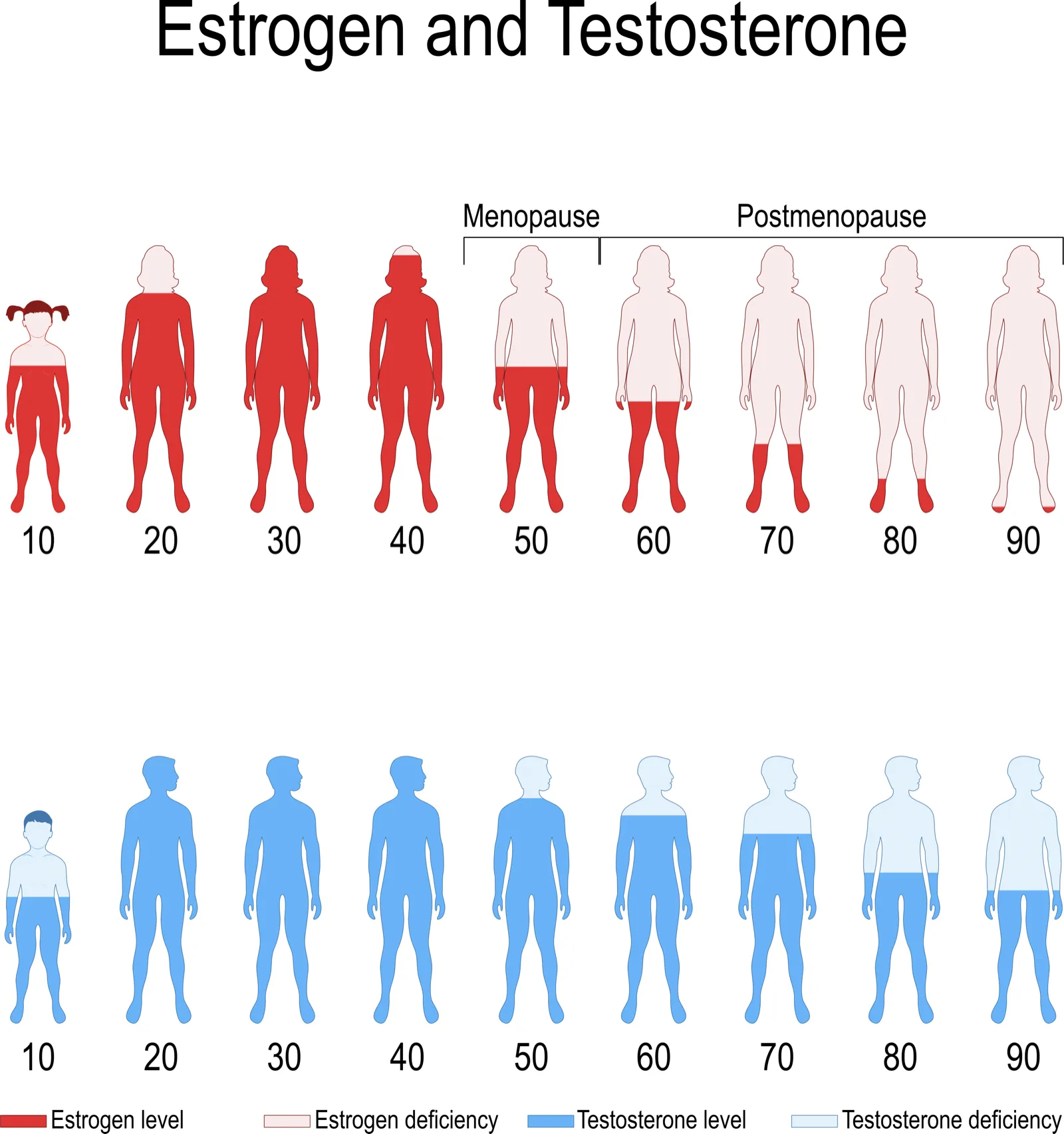
Normal total testosterone ranges from approximately 300-1,000 ng/dL, though many men begin experiencing symptoms when levels drop below 500 ng/dL. Free testosterone, which represents the biologically active fraction, is often a more sensitive indicator of true hormonal status (2).
Best Peptides to Increase Testosterone
Kisspeptin-10: The Most Direct Testosterone-Supporting Peptide
Kisspeptin-10 is a truncated form of the kisspeptin family of neuropeptides that plays a central role in regulating the reproductive hormone axis. It acts directly on the hypothalamus to stimulate the release of gonadotropin-releasing hormone (GnRH), which in turn triggers the pituitary gland to secrete LH and FSH. Elevated LH directly signals the Leydig cells in the testes to increase testosterone production (3).
How it works: Kisspeptin-10 binds to the KISS1R receptor (also called GPR54) on GnRH-secreting neurons in the hypothalamus. This activation initiates the entire downstream reproductive hormone cascade.
Clinical evidence: A landmark study published in the Journal of Clinical Endocrinology & Metabolism demonstrated that kisspeptin administration in healthy men produced a rapid and significant increase in LH, FSH, and testosterone levels (3). Subsequent research has confirmed kisspeptin’s role in stimulating the reproductive axis in men with various forms of hypogonadism (4).
Best for: Men seeking direct testosterone stimulation while preserving natural HPG axis function and fertility. Kisspeptin is particularly valuable for men who want to avoid the testicular suppression associated with TRT.
Typical dosing: Kisspeptin-10 is typically administered via subcutaneous injection, with protocols varying from daily to several times per week depending on clinical goals and provider preference.
CJC-1295 + Ipamorelin: Best Growth Hormone-Based Support
CJC-1295 is a growth hormone-releasing hormone (GHRH) analog, while ipamorelin is a growth hormone-releasing peptide (GHRP) that acts as a ghrelin mimetic. When used together, they produce a synergistic increase in growth hormone secretion that supports the broader hormonal environment in which testosterone thrives (5).
How they work: CJC-1295 stimulates the GHRH receptor on the pituitary gland to increase growth hormone production, while ipamorelin activates the ghrelin receptor (GHS-R1a) to further amplify the growth hormone pulse. The combination produces a more robust and sustained increase in GH and IGF-1 than either peptide alone.
Testosterone connection: While CJC-1295 and ipamorelin do not directly stimulate testosterone production, the elevation in growth hormone and IGF-1 supports testosterone through several indirect mechanisms:
- Improved deep sleep quality (testosterone is primarily produced during deep sleep stages)
- Enhanced lipolysis and reduced visceral fat (less aromatase activity)
- Better recovery and cellular repair
- Improved insulin sensitivity
- Support for overall endocrine system function
Clinical evidence: A study published in the Journal of Clinical Endocrinology & Metabolism found that CJC-1295 produced sustained increases in GH and IGF-1 levels in healthy adults (5). That trial measured hormone levels rather than body composition, so downstream effects on fat and lean mass are not established by it.
Best for: Men seeking comprehensive hormonal optimization, improved body composition, better sleep, and anti-aging benefits alongside indirect testosterone support.
Typical dosing: CJC-1295 (with or without DAC) combined with ipamorelin is typically administered via subcutaneous injection before bedtime, 5-6 days per week.
GHRP-2 and GHRP-6: Growth Hormone Releasing Peptides
GHRP-2 (pralmorelin) and GHRP-6 are older growth hormone-releasing peptides that stimulate GH secretion through the ghrelin receptor pathway. They have a well-established safety record and offer reliable GH elevation.
How they work: Both peptides bind to the GHS-R1a receptor, mimicking the action of ghrelin to stimulate pituitary GH release. GHRP-2 is generally considered more potent with less appetite stimulation, while GHRP-6 has a more pronounced effect on hunger.
Testosterone connection: Like CJC-1295 and ipamorelin, GHRP-2 and GHRP-6 support testosterone indirectly through growth hormone optimization. They are not known to act directly on LH release.
Key differences between GHRP-2 and GHRP-6:
| Characteristic | GHRP-2 | GHRP-6 |
|---|---|---|
| GH release potency | Higher | Moderate |
| Appetite stimulation | Mild | Significant |
| Cortisol elevation | Minimal | Minimal to mild |
| Prolactin effect | Minimal | Minimal |
| Best for | Lean body composition | Those who need appetite support |
Best for: Men who prefer an established, well-studied peptide with reliable GH-boosting effects and indirect testosterone support.
Tesamorelin: Visceral Fat Reduction and Hormone Balance
Tesamorelin is an FDA-approved GHRH analog originally developed to treat HIV-associated lipodystrophy. It is notable for its targeted effect on reducing visceral abdominal fat, which is one of the most significant suppressors of testosterone production in men (6).
How it works: Tesamorelin stimulates the pituitary gland to release growth hormone, which then promotes lipolysis (fat breakdown) particularly in the visceral compartment. It has been shown to reduce visceral adipose tissue by 15-20% in clinical trials.
Testosterone connection: Visceral fat is metabolically active tissue that produces high levels of the aromatase enzyme. Aromatase converts testosterone to estradiol (estrogen), creating a vicious cycle where increasing belly fat leads to lower testosterone, which in turn promotes more fat storage. By reducing visceral fat, tesamorelin helps break this cycle and creates a more favorable environment for testosterone production (7).
Clinical evidence: A trial published in the New England Journal of Medicine found that tesamorelin significantly reduced visceral fat and improved lipid profiles in patients with HIV-associated abdominal fat accumulation — the population in which it was studied and approved (6).
Best for: Men with significant abdominal obesity whose visceral fat is actively suppressing testosterone through aromatase-mediated conversion to estrogen. Many of these patients also benefit from a medical weight loss program alongside peptide therapy.
Best Peptide Stacks to Boost Testosterone
Combining peptides that work through complementary mechanisms can produce results greater than any single peptide alone. The following stacks are commonly used in clinical practice:
Stack 1: Kisspeptin-10 + CJC-1295 + Ipamorelin (Comprehensive Optimization)
This stack combines direct testosterone stimulation (kisspeptin) with growth hormone optimization (CJC-1295/ipamorelin) for the most comprehensive approach to natural hormone support.
- Kisspeptin-10 drives LH and testosterone production directly
- CJC-1295 + Ipamorelin enhances GH/IGF-1, improves sleep, and supports body composition
- Synergy: Better sleep from GH peptides enhances natural testosterone pulsatility; reduced visceral fat decreases aromatase activity
Best for: Men seeking maximum natural testosterone support with full-spectrum hormonal optimization.
Stack 2: Kisspeptin-10 + GHRP-2 (Direct Stimulation + GH Support)
A streamlined two-peptide approach that pairs direct LH stimulation with growth hormone release.
- Kisspeptin-10 stimulates the HPG axis for testosterone production
- GHRP-2 provides GH support and may have some direct LH-stimulating effects
- Synergy: Simpler protocol with complementary mechanisms
Best for: Men who want effective testosterone support with a simpler injection schedule.
Stack 3: CJC-1295/Ipamorelin + Tesamorelin (GH Optimization + Visceral Fat Focus)
For men whose primary barrier to healthy testosterone is excess visceral fat and metabolic dysfunction.
- CJC-1295/Ipamorelin provides broad GH optimization and sleep improvement
- Tesamorelin specifically targets visceral fat reduction
- Synergy: Aggressive visceral fat reduction removes aromatase-mediated testosterone suppression; improved body composition supports long-term hormonal health
Best for: Men with significant abdominal obesity who need to address the metabolic barriers to testosterone production before direct stimulation will be maximally effective.
Stack 4: Kisspeptin-10 + CJC-1295/Ipamorelin + BPC-157 (Optimization + Recovery)
Adding BPC-157 to a testosterone-focused stack supports tissue healing, gut health, and recovery.
- Kisspeptin-10 for direct testosterone support
- CJC-1295/Ipamorelin for GH optimization
- BPC-157 for tissue repair, gut integrity, and enhanced recovery from training
- Synergy: Better recovery enables more consistent training; improved gut health enhances nutrient absorption supporting hormone production
Best for: Active men who train regularly and want testosterone optimization alongside enhanced recovery and injury prevention.
How Long Do Peptides Take to Increase Testosterone?
Peptide therapy is not an overnight solution. The timeline for results depends on the specific peptide protocol, baseline hormone levels, and individual response:
| Timeframe | Expected Changes |
|---|---|
| Weeks 1-4 | Improved sleep quality, subtle energy improvements, enhanced recovery |
| Weeks 4-8 | Noticeable energy increase, improved mood, early libido changes, better workout performance |
| Weeks 8-12 | Measurable testosterone increases on lab work, visible body composition changes, significant libido improvement |
| Months 3-6 | Full optimization, stable testosterone levels, significant body composition changes, sustained energy and vitality |
Lab testing is essential for tracking progress. Baseline labs should be drawn before starting therapy, with follow-up testing at 8-12 weeks to assess response and guide dose adjustments.
Peptides vs. Testosterone Replacement Therapy (TRT)
Understanding when peptides are appropriate versus when TRT is necessary is critical for making an informed treatment decision.
| Factor | Peptide Therapy | TRT |
|---|---|---|
| Mechanism | Stimulates body’s own testosterone production | Replaces testosterone with exogenous hormone |
| Effect on natural production | Preserves and enhances HPG axis function | Suppresses natural production via negative feedback |
| Fertility impact | Generally preserves fertility | Suppresses sperm production; may cause infertility |
| Speed of results | Gradual (8-12 weeks for measurable changes) | Faster (4-6 weeks for noticeable changes) |
| Appropriate for | Mild to moderate deficiency; younger men; fertility concerns | Severe deficiency; primary hypogonadism; quality of life priority |
| Long-term considerations | Can be cycled or discontinued without withdrawal | May require lifelong use; discontinuation causes rebound |
| Typical testosterone increase | 20-40% above baseline | Can reach any target level |
Peptides May Be Preferred When:
- You want to preserve natural testosterone production and HPG axis function
- Fertility is a current or future concern
- Testosterone levels are mildly to moderately low (300-500 ng/dL)
- Symptoms are present but not severely impacting quality of life
- You prefer a therapy that works with your body’s natural systems
- You are interested in the additional benefits of GH optimization alongside testosterone support
TRT May Be Preferred When:
- Testosterone levels are severely low (below 250 ng/dL)
- Symptoms are significantly impacting daily function and quality of life
- Primary hypogonadism (testicular failure) is the diagnosis, where the testes cannot respond to stimulation
- Faster and more predictable results from testosterone therapy are clinically important
- Previous peptide therapy has not produced adequate improvement
In some cases, a combined approach using both peptides and TRT may be optimal. For example, HCG (human chorionic gonadotropin) is often used alongside TRT to maintain testicular function and fertility, and growth hormone-releasing peptides can complement TRT by addressing sleep, recovery, and body composition.
Who Should Consider Peptides for Testosterone?
Ideal candidates for peptide-based testosterone support include men who:
- Are experiencing symptoms of declining testosterone (fatigue, low libido, muscle loss)
- Have lab-confirmed low or borderline testosterone levels
- Want to support natural hormone production rather than replace it
- Are concerned about preserving fertility
- Seek the additional benefits of growth hormone optimization (sleep, recovery, body composition)
- Are willing to commit to a multi-month treatment protocol with regular monitoring
- Have a functioning HPG axis (secondary hypogonadism rather than primary testicular failure)
Who Should Avoid Peptides for Testosterone?
Certain individuals should consult carefully with a healthcare provider before starting peptide therapy:
- Men with hormone-sensitive cancers (prostate, breast)
- Individuals with active or untreated pituitary disorders
- Patients with uncontrolled diabetes or severe metabolic disease
- Those with a history of adverse reactions to peptide therapy
- Men with primary hypogonadism (where the testes cannot respond to stimulation)
How Rewind Anti-Aging of Miami Supports Testosterone Naturally
At Rewind Anti-Aging of Miami, peptide therapy for testosterone optimization begins with a thorough evaluation and continues with personalized, medically supervised treatment. Our approach includes:
- Comprehensive lab panels measuring total and free testosterone, LH, FSH, SHBG, estradiol, prolactin, thyroid hormones, IGF-1, metabolic markers, and vitamin D
- Detailed symptom assessment to understand how hormonal changes are affecting your daily life
- Personalized peptide protocols selected based on your lab results, symptoms, goals, and lifestyle
- Ongoing monitoring with follow-up labs at 8-12 week intervals to track progress and adjust treatment
- Combination therapy options integrating peptides with nutritional support, lifestyle optimization, and other complementary treatments
- Transparent guidance on when peptides are appropriate and when TRT or other interventions may be more suitable
Whether you are seeking to support natural testosterone production, optimize growth hormone levels, or develop a comprehensive hormone health strategy, our team builds a plan designed specifically for your needs.
Schedule a consultation today to get started with evidence-based testosterone optimization.
Related Articles
- Peptides and Testosterone Stack: The Complete Guide
- Does CJC-1295 Increase Testosterone?
- Sermorelin With TRT
Interested in peptides for testosterone support? Rewind Anti-Aging of Miami offers personalized peptide therapy and testosterone therapy with comprehensive lab work and ongoing monitoring. Schedule a consultation →
References
- Fosgerau, K. and Hoffmann, T. “Peptide Therapeutics: Current Status and Future Directions.” Drug Discovery Today, 20(1), 122-128, 2015. DOI: 10.1016/j.drudis.2014.10.003
- Bhasin, S., et al. “Testosterone Therapy in Men with Hypogonadism: An Endocrine Society Clinical Practice Guideline.” Journal of Clinical Endocrinology & Metabolism, 103(5), 1715-1744, 2018. DOI: 10.1210/jc.2018-00229
- Dhillo, W.S., et al. “Kisspeptin-54 Stimulates the Hypothalamic-Pituitary Gonadal Axis in Human Males.” Journal of Clinical Endocrinology & Metabolism, 90(12), 6609-6615, 2005. DOI: 10.1210/jc.2005-1468 (PMID: 16174713)
- George, J.T., et al. “Kisspeptin-10 Is a Potent Stimulator of LH and Increases Pulse Frequency in Men.” Journal of Clinical Endocrinology & Metabolism, 96(8), E1228-E1236, 2011. DOI: 10.1210/jc.2011-0089
- Teichman, S.L., et al. “Prolonged Stimulation of Growth Hormone (GH) and Insulin-Like Growth Factor I Secretion by CJC-1295.” Journal of Clinical Endocrinology & Metabolism, 91(3), 799-805, 2006. DOI: 10.1210/jc.2005-1536
- Falutz, J., et al. “Metabolic Effects of a Growth Hormone-Releasing Factor in Patients with HIV.” New England Journal of Medicine, 357(23), 2359-2370, 2007. DOI: 10.1056/NEJMoa072375 (PMID: 18057338)
- Cohen, P.G. “Aromatase, Adiposity, Aging and Disease: The Hypogonadal-Metabolic-Atherogenic-Disease and Aging Connection.” Medical Hypotheses, 56(6), 702-708, 2001. DOI: 10.1054/mehy.2000.1169
- Traish, A.M., et al. “The Dark Side of Testosterone Deficiency: Metabolic Syndrome and Erectile Dysfunction.” Journal of Andrology, 30(1), 10-22, 2009. DOI: 10.2164/jandrol.108.005215
Disclaimer: This article is for informational purposes only and does not constitute medical advice. Peptide therapies are used off-label for hormone optimization and are not FDA-approved for the treatment of low testosterone. Individual results vary based on baseline hormone levels, health status, and adherence to treatment protocols. Always consult a qualified healthcare provider before beginning any peptide therapy. Rewind Anti-Aging of Miami does not guarantee specific outcomes from any treatment.
Frequently Asked Questions
Which peptide is best for increasing testosterone?
Kisspeptin-10 is the most direct peptide option for increasing testosterone. It activates the hypothalamus to release GnRH, which stimulates LH production and signals the testes to produce more testosterone. Clinical studies published in the Journal of Clinical Endocrinology & Metabolism have confirmed its ability to stimulate the reproductive hormone cascade in healthy men.
Does CJC-1295 increase testosterone?
CJC-1295 does not directly stimulate testosterone production. Instead, it increases growth hormone and IGF-1 levels, which support the hormonal environment needed for healthy testosterone production. Benefits include improved sleep quality, enhanced recovery, better body composition, and reduced visceral fat, all of which indirectly support testosterone levels.
Can you combine BPC-157 with testosterone therapy?
Yes, BPC-157 is commonly combined with testosterone therapy. BPC-157 is a tissue-healing peptide that supports recovery from exercise and injury, promotes gut health, and may have neuroprotective properties. It does not directly affect testosterone levels but can enhance overall treatment outcomes when used alongside TRT or peptide therapy.
How long do peptides take to increase testosterone?
Most men begin noticing early benefits such as improved sleep, energy, and recovery within 4 to 6 weeks of starting peptide therapy. Measurable testosterone increases typically appear within 8 to 12 weeks, with full optimization occurring over 3 to 6 months depending on the specific peptide protocol, baseline hormone levels, and lifestyle factors.
Are peptides safer than TRT for boosting testosterone?
Peptides that support testosterone work by stimulating the body's own production mechanisms rather than introducing exogenous testosterone. This preserves the hypothalamic-pituitary-gonadal axis, natural LH and FSH production, and fertility. For men with mild to moderate testosterone deficiency who want to maintain natural production, peptides may offer a gentler approach. However, for severely low testosterone, TRT may be more appropriate.
What is the difference between HRT and TRT?
HRT (hormone replacement therapy) is a broad term that refers to replacing or optimizing any deficient hormones, including thyroid, growth hormone, estrogen, progesterone, or testosterone. TRT (testosterone replacement therapy) specifically refers to the replacement of testosterone in men who are clinically deficient. TRT is a subset of HRT.
More in hormones
When Does Perimenopause Start? Earlier Than You Think
When does perimenopause start? Often the late 30s to early 40s — years before menopause. Here are the early symptoms, why labs look normal, and treatment options.
hormonesThyroid Symptoms That Get Missed (and Why)
Thyroid symptoms like fatigue, weight gain, and brain fog are often missed by TSH-only testing. Here's why a full thyroid panel may matter.
hormonesTestosterone and Heart Health in Men: What the Evidence Says
Testosterone and heart health: what current research, including the TRAVERSE trial, reveals about TRT, cardiovascular risk, and low T in men.
⚕ Medical Disclaimer
The information on this page is for educational purposes only and does not constitute medical advice, diagnosis, or treatment. All treatments at Rewind Anti-Aging of Miami are performed under the supervision of licensed medical professionals. Individual results may vary. Consult your physician before beginning any new treatment protocol.
Meet our clinical team →Not sure which treatment is right for you?
Take our free 2-minute assessment and get a personalized recommendation.
Areas We Serve in Miami & South Florida
Our clinic at 24 NW 29th Street is in Wynwood & Midtown, minutes from Edgewater and Brickell. We also care for patients across Coral Gables, Aventura, Key Biscayne, and Doral — plus the entire state of Florida via telehealth.
Take the Next Step
Our team at Rewind Anti-Aging in Miami is here to help you determine if hormone therapy is right for your goals.