
Ready to explore hormone therapy?
Schedule a free consultation with our medical team in Miami.
Your Symptoms Are Not Just Getting Older
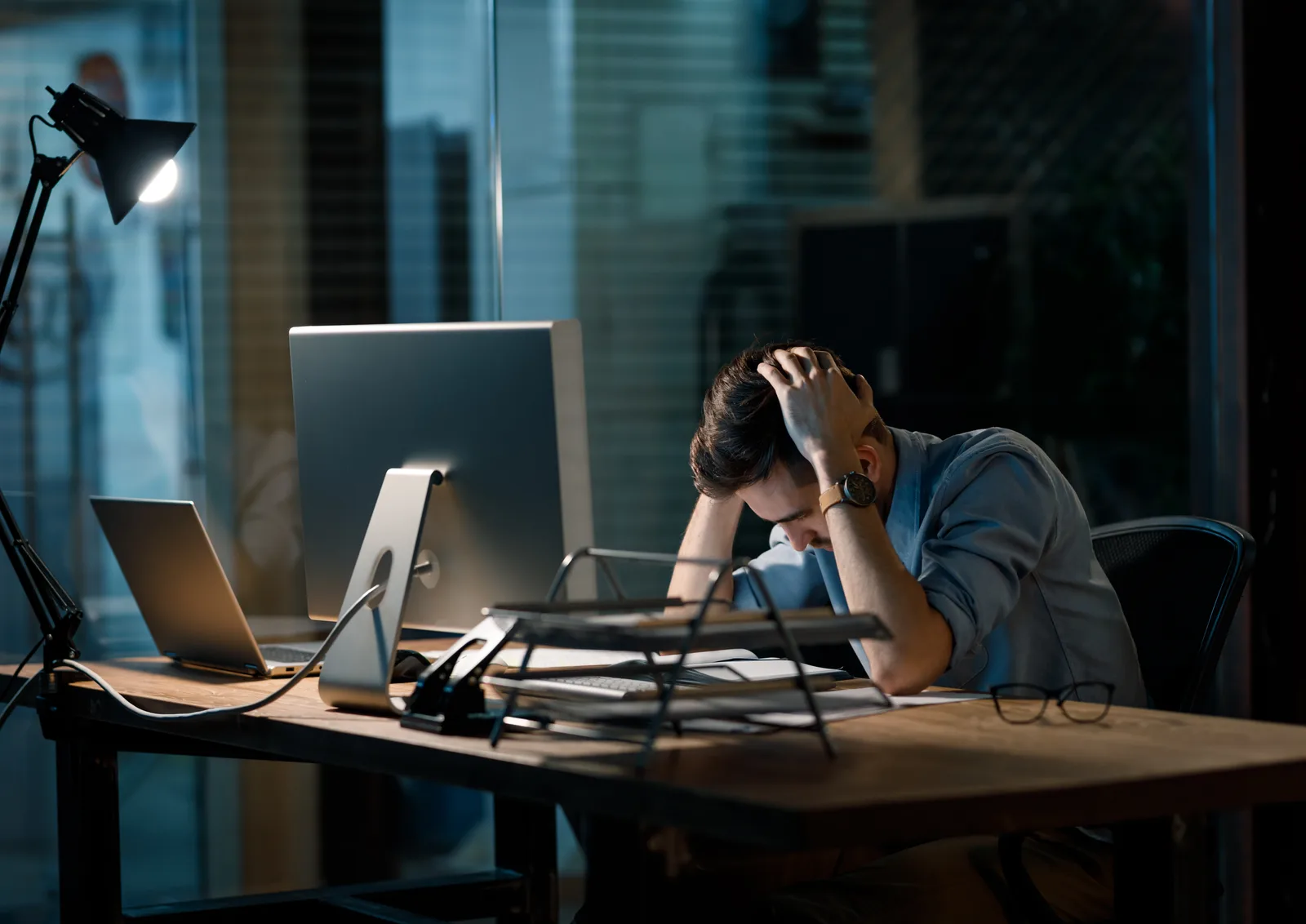
You already know stress is bad for you. Everyone knows. But most people do not realize that chronic stress is not just making them feel bad — it is systematically dismantling their hormonal system. Many of the symptoms people attribute to aging, a busy life, or poor lifestyle are actually stress-driven hormone disruption that can be measured, quantified, and addressed.
The fatigue that does not resolve with sleep. The stubborn weight around the midsection. The declining libido that used to come and go but now seems to stay gone. The brain fog. The mood changes. The feeling that you are fighting your own body. These are not inevitable consequences of being 45 or 55. They are downstream effects of a hormonal cascade driven by cortisol that your body was never designed to sustain.
Here is exactly what is happening — and what the evidence-based path out of it looks like.
The Cortisol-Hormone Cascade
Cortisol is your primary stress hormone, produced by the adrenal glands. It is essential. Without cortisol, you cannot mount an immune response, cannot maintain blood pressure, cannot mobilize energy during a threat. Cortisol is designed to rise acutely in response to danger and fall when the threat passes.
The problem is that modern life rarely produces discrete threats that pass. Work pressure, financial stress, family demands, sleep deprivation, inflammatory diets, overtraining, and constant stimulation from screens create a chronic low-grade activation of the HPA (hypothalamic-pituitary-adrenal) axis. Cortisol that was supposed to spike and recover becomes cortisol that stays elevated. The default stress state becomes the new normal.
When cortisol elevation becomes chronic rather than acute, the hormonal system that cortisol was supposed to support becomes the system cortisol damages. Every major hormonal pathway is affected.
Cortisol vs Testosterone
The relationship between cortisol and testosterone is inversely proportional and has been documented across decades of research. When cortisol rises, testosterone falls. When cortisol stays elevated chronically, testosterone stays suppressed chronically.
This happens through several mechanisms:
The Pregnenolone Steal
Chronic stress lowers sex hormones, but not the way it’s often described. The popular “pregnenolone steal” idea — that the body diverts pregnenolone away from making testosterone and estrogen in order to produce more cortisol — isn’t supported by how hormone production actually works, because each hormone is made in its own specialized cells rather than drawn from a single shared pool (Miller & Auchus, Endocrine Reviews, 2011; PMID 21051590). The real mechanism is that sustained high cortisol suppresses the brain signals (GnRH and LH) that tell the body to produce testosterone and estrogen, and can act directly on the ovaries and testes as well (Whirledge & Cidlowski, 2010; PMID 20595939). The clinical result is the same one many people experience under prolonged stress: downstream hormone levels run lower than they should. The practical takeaway is also the same — bringing chronically elevated cortisol back down gives the body’s sex-hormone production room to recover.
Central Suppression of LH
Luteinizing hormone (LH) is the pituitary signal that tells the testes to produce testosterone (and the ovaries to produce estrogen and progesterone). Chronic elevated cortisol suppresses LH release, reducing the signal that drives testosterone production.
Direct Testicular Effects
Beyond the central and precursor effects, cortisol also appears to have direct inhibitory effects on testosterone synthesis within the testes themselves.
The Clinical Picture
The net result is that men under chronic stress frequently present with clinically low testosterone on their labs — often with symptoms that look identical to age-related hypogonadism. Fatigue, reduced libido, difficulty building muscle, increased body fat, mood changes, cognitive dullness. We see this pattern constantly in our clinic: stressed men who have been told their symptoms are “just getting older” when the underlying driver is stress-induced hormonal suppression that can be addressed.
Our article on the signs of low testosterone in men covers the symptom picture in depth. The solutions — TRT when indicated, stress reduction, and sleep optimization — address both the biochemistry and the underlying driver.
Cortisol vs Thyroid
Chronic stress disrupts thyroid function through multiple pathways, and the result is often missed by standard primary care testing.
Suppressed TSH and T3 Conversion
Cortisol suppresses TSH (thyroid-stimulating hormone) release from the pituitary and impairs the peripheral conversion of T4 (the storage form of thyroid hormone) to T3 (the active form). This produces a pattern that standard testing misses: TSH may appear “normal” but free T3 is low, and the patient feels hypothyroid.
Reverse T3 Elevation
Under chronic stress, the body increasingly converts T4 to reverse T3 (rT3) instead of active T3. Reverse T3 binds thyroid receptors but does not activate them — essentially blocking active thyroid signaling. This is an evolutionarily adaptive response to acute stress or illness (conserving energy during a crisis) but becomes pathological when stress is chronic. Elevated rT3 is a specific marker of chronic stress and is not included in standard thyroid panels.
The Symptom Picture
Many stressed patients have classic hypothyroid symptoms — fatigue, cold sensitivity, weight gain, hair loss, brain fog, constipation — with “normal” TSH on basic testing. A complete thyroid panel including TSH, free T3, free T4, reverse T3, and thyroid antibodies reveals the pattern. Treating the thyroid component, addressing the cortisol driver, or both is often transformative.
Cortisol vs Growth Hormone
Growth hormone is critical for muscle recovery, fat metabolism, skin elasticity, sleep quality, and immune function. Chronic cortisol suppresses growth hormone release through multiple mechanisms.
Direct GH Suppression
Elevated cortisol directly suppresses growth hormone release from the pituitary. This effect is dose-dependent and persistent — as long as cortisol stays elevated, GH stays suppressed.
Sleep-Mediated GH Suppression
Most growth hormone release occurs during deep sleep, particularly the first half of the night. Chronic stress disrupts sleep — reducing time spent in deep sleep, increasing sleep fragmentation, and reducing total sleep quality. Less deep sleep means less growth hormone release, compounding the direct cortisol effect.
The Clinical Picture
Patients with chronically elevated cortisol often present with low IGF-1 (the best proxy for growth hormone status), slow exercise recovery, stubborn visceral fat, declining skin quality, and disrupted sleep. Growth hormone peptides like sermorelin, CJC-1295, and ipamorelin can restore GH signaling in these patients — but addressing the cortisol driver is what makes the peptide therapy actually work well rather than fighting an upstream suppression.
Cortisol vs Insulin
Cortisol and insulin have a complicated relationship that becomes destructive under chronic stress.
Acute Cortisol Raises Blood Sugar (By Design)
Cortisol’s evolutionary role is mobilizing energy during acute threats. It stimulates gluconeogenesis (making new glucose from non-carbohydrate sources) and promotes insulin resistance to preserve glucose availability for the brain during stress. In acute stress, this is adaptive.
Chronic Cortisol Creates Insulin Resistance
When cortisol stays elevated chronically, the adaptive response becomes pathological. Tissues become resistant to insulin, blood sugar runs higher, and the pancreas compensates by producing more insulin. Over time, fasting insulin rises, HOMA-IR (a marker of insulin resistance) rises, and the body moves gradually toward metabolic syndrome and type 2 diabetes.
The Weight Gain Cycle
Elevated insulin promotes fat storage, particularly visceral fat around the organs. Insulin resistance makes weight loss substantially harder. Cortisol also drives cravings for calorie-dense, high-carbohydrate foods, creating a feedback loop where stress drives eating that worsens insulin resistance that drives more stress on the body. Many patients who feel like they “cannot lose weight no matter what” are trapped in this cycle — and purely caloric interventions (eat less, move more) often fail until the cortisol driver is addressed.
The Metabolic Weight Loss Implication
This is part of why patients on medical weight loss medications sometimes plateau or struggle despite the medications working at the appetite level. Cortisol-driven insulin resistance and visceral fat storage are working against the medication’s effects. Addressing the cortisol and insulin picture alongside GLP-1 therapy produces substantially better results than medication alone.
Breaking the Cycle
The evidence-based path out of stress-driven hormone disruption has four components. Each matters. Trying to fix one without the others rarely works.
Step 1: Measure It
You cannot optimize what you cannot measure. A complete stress hormone workup includes:
- Morning serum cortisol (ideally at 8 AM after fasting)
- Complete thyroid panel — TSH, free T3, free T4, reverse T3, thyroid antibodies
- Sex hormones — total and free testosterone, SHBG, estradiol, progesterone, DHEA-S
- Metabolic markers — fasting insulin, fasting glucose, HOMA-IR, HbA1c
- IGF-1 as a growth hormone proxy
- Inflammatory markers — hs-CRP and homocysteine
Our executive lab panel covers all of these and more. Without data, you are guessing.
Step 2: Address the Hormonal Damage
If your labs show clinically significant hormone disruption — low testosterone, suboptimal thyroid, low IGF-1, elevated inflammation — treating these directly while working on cortisol produces faster results than waiting for cortisol alone to normalize. Testosterone therapy or female hormone replacement when indicated, thyroid optimization when indicated, and peptide therapy for growth hormone support can dramatically accelerate recovery.
Step 3: Lifestyle Interventions That Actually Lower Cortisol
Not all stress-reduction advice is equal. Here is what has actual evidence:
Sleep optimization. Sleep is not a soft recommendation. Seven to nine hours of quality sleep, consistent timing, cool dark environment, and limited screens before bed directly lower cortisol and restore hormonal balance. If you have sleep apnea (common and underdiagnosed), treat it. Sleep is foundational to everything else.
Resistance training — not excessive cardio. Heavy endurance training (marathon training, excessive high-intensity cardio) actually raises cortisol. Resistance training lowers it, improves insulin sensitivity, and supports testosterone. Three to four resistance training sessions per week with adequate recovery is the evidence-based prescription.
Breathing techniques and meditation. Controlled breathing directly activates the parasympathetic nervous system and reduces cortisol. Research on mindfulness meditation shows meaningful reductions in cortisol with consistent practice. These are not woo — they are measurable physiological interventions.
Adaptogens with evidence. Ashwagandha has the strongest research support for cortisol reduction, with multiple randomized controlled trials showing it may help lower cortisol (Chandrasekhar et al., 2012; PMID 23439798). Rhodiola has more modest support. Not all herbal stress products are equal — stick to what the evidence supports.
Nutrition. Blood sugar stability (adequate protein, limited refined carbs, consistent meal timing) reduces the insulin-cortisol feedback loop. Anti-inflammatory nutrition (omega-3s, phytochemicals, reduced processed foods) reduces systemic inflammation that amplifies cortisol effects.
Step 4: Ongoing Monitoring
Cortisol management is a long game. Repeat lab work every 3 to 6 months tracks whether interventions are working. Symptom tracking helps identify what is changing and what is not. Protocol adjustments over time are the norm, not the exception.
How We Approach This at Rewind
Our clinical approach to stress-driven hormone disruption has three phases:
- Comprehensive baseline — executive lab panel, detailed clinical history, and symptom review to map the full picture
- Targeted treatment — hormone optimization when indicated, thyroid correction when indicated, peptide therapy for GH support, and lifestyle guidance tailored to your situation
- Ongoing monitoring and adjustment — repeat labs and clinical check-ins to track progress and refine the protocol
Most patients feel substantially better within weeks of starting hormone optimization. Full recovery of the downstream cortisol effects typically takes months to a year, because the system is complex and the upstream driver (your actual life) often has to change too.
But the investment is worth it. The symptoms you have been attributing to aging may not be aging at all. They may be a stress cascade that is fixable — once you understand what is actually happening.
Related Articles
- Signs of Low Testosterone in Men: 20+ Symptoms to Watch For
- Anti-Aging in Your 40s: What’s Changing and What You Can Do About It
- Anti-Aging in Your 50s: What Actually Works
Ready to understand what your hormones are actually doing? Rewind Anti-Aging of Miami offers comprehensive diagnostic testing, hormone optimization, and personalized longevity protocols designed to address the full picture — not just the symptoms. Schedule a consultation →
Frequently Asked Questions
How does stress affect your hormones?
Chronic stress drives persistent elevation of cortisol, the primary stress hormone. Elevated cortisol suppresses testosterone production in men, disrupts estrogen and progesterone balance in women, reduces thyroid hormone activity, blunts growth hormone release, and promotes insulin resistance. The downstream effects include fatigue, weight gain, reduced libido, poor sleep, brain fog, and accelerated biological aging. Many symptoms people attribute to normal aging are actually stress-driven hormone disruption.
Can stress cause low testosterone?
Yes. Prolonged stress keeps cortisol elevated, and sustained high cortisol suppresses the brain signals that drive testosterone and estrogen production — and can dampen the ovaries and testes directly. (This is the accurate mechanism; the older 'pregnenolone steal' explanation, in which cortisol supposedly diverts a shared hormone supply, isn't how hormone production actually works.) The effect on hormone levels is real, and lowering chronic cortisol is what allows downstream hormones to recover.
What is the pregnenolone steal?
The 'pregnenolone steal' is the popular idea that, under chronic stress, the body diverts pregnenolone — a shared precursor — away from making testosterone, estrogen, progesterone, and DHEA in order to produce more cortisol. It isn't supported by how hormone production actually works, because each hormone is made in its own specialized cells rather than drawn from a single shared pool. What chronic stress actually does is keep cortisol elevated, and sustained high cortisol suppresses the brain signals (GnRH and LH) that drive testosterone and estrogen and can act on the ovaries and testes directly. The downstream effect — lower sex hormones under prolonged stress — is real, and lowering chronic cortisol is what lets them recover.
How do you reverse the effects of chronic stress on hormones?
Reversing stress-induced hormone disruption requires a multi-pronged approach. Measure hormones and cortisol comprehensively to establish the baseline. Address the hormonal damage directly through optimization protocols if clinically indicated. Reduce cortisol through evidence-based interventions: sleep optimization, appropriate resistance training, breathing techniques, and adaptogens with research support. Monitor over time. It is rarely a single fix; it is a coordinated approach over months to years.
Does stress cause weight gain?
Chronic stress drives weight gain through multiple mechanisms. Cortisol promotes insulin resistance, leading to blood sugar dysregulation and increased fat storage, particularly visceral fat. Cortisol increases appetite for calorie-dense foods. Stress disrupts sleep, which independently reduces insulin sensitivity and impairs fat loss. Stress suppresses testosterone and growth hormone, both of which support lean muscle mass and metabolic rate. The combined effect makes weight loss substantially more difficult during periods of chronic stress.
What tests measure stress hormones?
A complete stress-related workup includes morning serum cortisol, a full thyroid panel (TSH, free T3, free T4, reverse T3, thyroid antibodies), total and free testosterone, DHEA-S, estradiol, progesterone, fasting insulin and HOMA-IR, and inflammatory markers like hs-CRP. Some protocols also use salivary cortisol testing at multiple points during the day to assess the cortisol rhythm, and comprehensive adrenal panels when indicated.
More in hormones
When Does Perimenopause Start? Earlier Than You Think
When does perimenopause start? Often the late 30s to early 40s — years before menopause. Here are the early symptoms, why labs look normal, and treatment options.
hormonesThyroid Symptoms That Get Missed (and Why)
Thyroid symptoms like fatigue, weight gain, and brain fog are often missed by TSH-only testing. Here's why a full thyroid panel may matter.
hormonesTestosterone and Heart Health in Men: What the Evidence Says
Testosterone and heart health: what current research, including the TRAVERSE trial, reveals about TRT, cardiovascular risk, and low T in men.
⚕ Medical Disclaimer
The information on this page is for educational purposes only and does not constitute medical advice, diagnosis, or treatment. All treatments at Rewind Anti-Aging of Miami are performed under the supervision of licensed medical professionals. Individual results may vary. Consult your physician before beginning any new treatment protocol.
Meet our clinical team →Not sure which treatment is right for you?
Take our free 2-minute assessment and get a personalized recommendation.
Areas We Serve in Miami & South Florida
Our clinic at 24 NW 29th Street is in Wynwood & Midtown, minutes from Edgewater and Brickell. We also care for patients across Coral Gables, Aventura, Key Biscayne, and Doral — plus the entire state of Florida via telehealth.
Take the Next Step
Our team at Rewind Anti-Aging in Miami is here to help you determine if hormone therapy is right for your goals.